Free glossary
The implant industry, word by word
147 terms you’ll hear from surgeons, engineers, auditors and buyers, in plain English. Each one links to the unit of the course that lets you handle it.
No term matches. Try a shorter word.
#
A
- Absolute stability
- Fixation so rigid that the fracture ends don’t move at all, usually with compression. The bone heals directly, with little callus.
- Unit 2 →
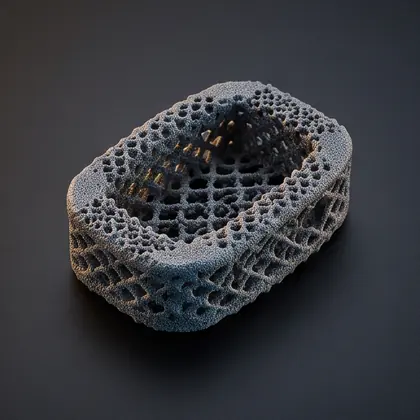
- Additive manufacturingalso 3D printing, LPBF
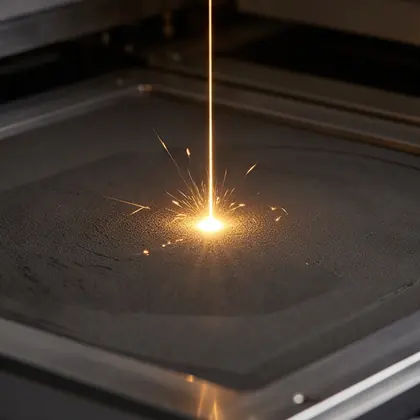
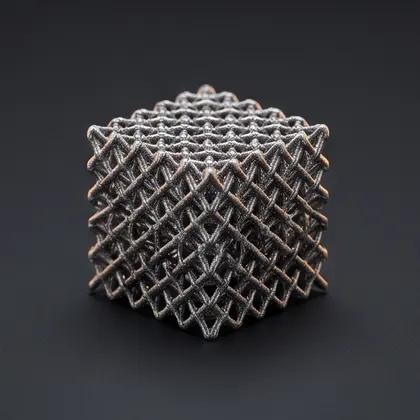
- Building a part layer by layer, for implants usually by melting metal powder with a laser (3D printing).
- Unit 5 →
- AdvaMed Code
- The US medical technology industry’s code of ethics for dealing with healthcare professionals. MedTech Europe and the MTAA have their own.
- Unit 15 →
- ALTR
- Adverse local tissue reaction: inflammation and fluid around a joint caused by metal debris.
- Unit 14 →
- Anatomical plate
- A plate pre-shaped for one area of one bone, such as the end of the radius, with screw directions chosen to catch the key fragments.
- Unit 2 →
- Anodising
- Growing a controlled oxide layer on titanium with electricity. Its thickness sets the colour, which is used to code sizes.
- Unit 4 →

B
- Bearing surface
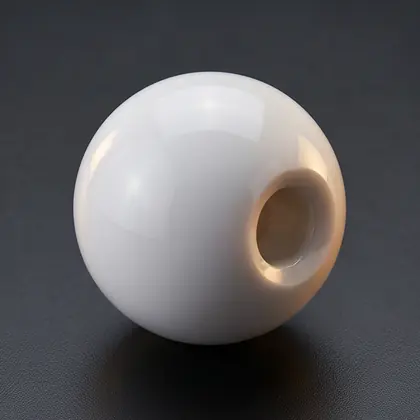
- The two surfaces that slide on each other in a joint replacement, such as a ceramic head on a polyethylene liner.
- Unit 14 →
- Bill-only
- A sale where the hospital uses an implant from stock the company owns, and the company bills for it after the case.
- Unit 13 →
- Bioburden
- The number of living microbes on a device before it is sterilised, counted in colony-forming units (CFU).
- Unit 9 →
- Bone platealso Plate
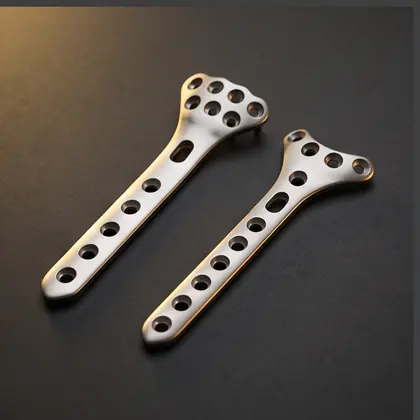
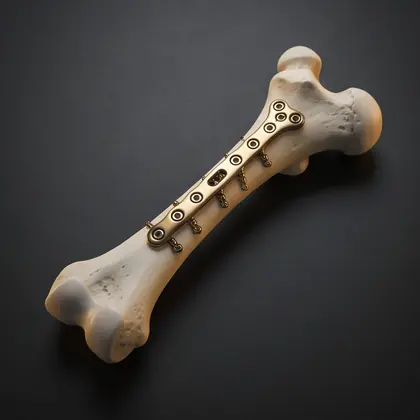
- A strip of metal screwed along a broken bone to hold the pieces in line while they heal.
- Unit 2 →
C
- C-armalso Fluoroscopy
- The mobile X-ray machine used in theatre to check fracture position and implant placement.
- Unit 3 →
- Calibration
- Checking a measuring instrument against a traceable reference and recording the result, on a schedule.
- Unit 6 →
- Callus
- The new bone that forms around a fracture as it heals with a little movement, like a weld seam.
- Unit 2 →
- Cancellous bone
- The spongy, honeycomb bone inside the ends of long bones and in the vertebrae. Softer than cortical bone, so screws for it have deeper, wider threads.
- Unit 2 →
- Cancellous screw
- A screw with a deeper, wider thread for soft spongy bone. Partly threaded versions can act as lag screws.
- Unit 2 →
- Cannulated screw
- A screw with a hollow centre, so it can be put in over a guide wire that has already been checked on X-ray.
- Unit 2 →
- CAPA
- Corrective and preventive action: fix the root cause, then change the system so it can’t happen again.
- Unit 11 →
- CE mark
- The mark showing a device conforms to EU law and may be sold in the EU. For implants, a notified body must agree.
- Unit 12 →
- Change control
- The procedure that assesses any change to a validated design or process and decides whether it must be re-validated.
- Unit 9 →
- Chemical indicator
- A strip or label that changes colour when exposed to sterilising conditions. An internal one sits inside the tray.
- Unit 13 →
- Circulating nurse
- The unscrubbed nurse who fetches, opens packs onto the sterile field, records and counts.
- Unit 3 →
- Cleanroom
- A room where airborne particles are controlled to a set class, for packing implants and other clean work.
- Unit 8 →
- CNC
- Computer numerical control: a machine tool that cuts parts by following a program rather than an operator’s hands.
- Unit 7 →
- Cobalt-chromealso CoCrMo
- A very hard, wear-resistant cobalt-chromium-molybdenum alloy, used for joint replacement heads and knee components.
- Unit 4 →
- Comminuted fracture
- A break where the bone is shattered into several pieces over a stretch, rather than one clean crack.
- Unit 2 →
- Complaint
- Any report that a device may not have met its claims for safety, performance or quality after release. Each one is investigated.
- Unit 11 →
- Compression platealso Dynamic compression plate, DCP
- A plate that holds by friction: its screws press it onto the bone, and its sloped oval holes can push the fracture ends together.
- Unit 2 →
- Conflict of interest
- A financial or personal tie that could influence judgement, managed by disclosure.
- Unit 15 →
- Consignment stock
- Implants kept on the hospital’s shelf but owned by the company until used.
- Unit 3 →
- Control chartalso SPC
- A running chart of a measurement with statistical limits, so a process drifting is seen before it makes bad parts.
- Unit 5 →
- Cortical screw
- A screw with a fine, shallow thread, made to grip the dense outer wall of a bone.
- Unit 1 →
- Count-back
- Checking a set after surgery to record what was used and what’s missing, so it can be billed and replenished.
- Unit 13 →
- Cpk
- Process capability index: how comfortably a process stays inside its limits. Under 1 makes bad parts; 1.33 is a common minimum.
- Unit 7 →
- CSSDalso SPD, sterile processing
- Central sterile services department: the hospital team that cleans, checks and sterilises instruments.
- Unit 2 →
- Cutting insert
- A small, replaceable cutting tip. It wears with every part it cuts, so it has a fixed life before it must be swapped.
- Unit 1 →


D
- Design controls
- The disciplined process for designing a device: user needs, inputs, outputs, reviews, verification, validation and transfer.
- Unit 10 →
- Design freeze
- The point where the design outputs are approved and further changes need formal change control.
- Unit 10 →
- Design history filealso DHF
- The record of how a device was designed and proven, from the first requirements to the final reviews.
- Unit 10 →
- Device class
- A device’s risk class, which sets how much proof regulators need. Most trauma implants are Class II in the US and Class IIb in the EU.
- Unit 12 →

E
- Elastic modulusalso Stiffness, Young’s modulus
- How stiff a material is: how much it stretches under a given load. Titanium is about half as stiff as steel; bone far less than either.
- Unit 4 →
- Ethylene oxidealso EO, EtO
- A gas that sterilises medical devices at a low temperature, followed by aeration to remove what’s left of it.
- Unit 9 →
- Explant
- Any implant taken back out of a patient. It’s returned to the maker so it can be examined.
- Unit 1 →
- External fixator
- A frame outside the body, connected to the bone by pins or wires through the skin. Used for badly damaged soft tissue and as a temporary fix.
- Unit 2 →
F
- Factory acceptance testalso FAT
- A machine running your part at the maker’s site before it ships.
- Unit 7 →
- Fair market valuealso FMV
- The price an independent party would pay for the same service. Payments to surgeon consultants must not exceed it.
- Unit 15 →
- Fatigue
- Breaking under a small load repeated many times, rather than one big one, like bending a paperclip until it snaps.
- Unit 1 →
- Field safety corrective actionalso FSCA
- An action on devices already on the market, such as a recall or new instructions.
- Unit 11 →
- Field safety noticealso FSN
- The manufacturer’s formal letter telling hospitals about a recall or safety action and what to do.
- Unit 3 →
- Finite element analysisalso FEA
- A computer simulation that predicts stresses and strength before parts are made.
- Unit 10 →
- First-article inspectionalso FAI
- A full measurement of the first part made after a set-up or change, before production continues.
- Unit 5 →
- Fixture
- The clamp that holds a part in exactly the right position while it’s machined or measured.
- Unit 5 →
- Form 483
- The list of inspectional observations the FDA gives a company at the end of an inspection.
- Unit 12 →
- Fretting
- Tiny repeated movements between two touching metal surfaces that wear away their protective oxide and cause corrosion.
- Unit 14 →

G
- Galvanic corrosion
- Corrosion that happens when two different metals touch in a salty liquid, like a battery.
- Unit 4 →
- Gamma sterilisation
- Sterilising packed products with gamma radiation, usually from cobalt-60, at a validated dose.
- Unit 9 →
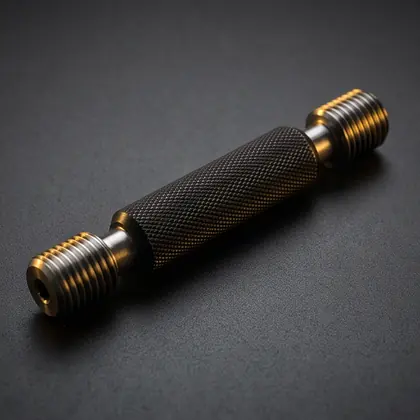
- Go/no-go gauge
- A simple fixed gauge that a good part fits (go) and a bad part doesn’t (no-go), such as for a thread.
- Unit 6 →
H
I
- IFU
- Instructions for use: the manufacturer’s rules for the product, packed with it or online. The final word.
- Unit 3 →
- Interbody cage
- A spacer placed between two vertebrae, often filled with bone graft, to restore height and let them fuse.
- Unit 14 →
- Interlocking screw
- A screw passed across the bone and through a hole in an intramedullary nail, so the bone can’t shorten or rotate around it.
- Unit 2 →
- Intra-articular fracture
- A break that runs into a joint surface. It usually needs to be rebuilt exactly, or the joint wears early.
- Unit 2 →
- Intramedullary nailalso IM nail
- A metal rod passed down the hollow centre of a long bone, locked with screws at each end. Common for thigh and shin fractures.
- Unit 2 →
- ISO 7
- A cleanroom class in ISO 14644-1: no more than 352,000 particles of 0.5 µm or larger per cubic metre of air.
- Unit 8 →
- ISO 13485
- The international standard for a medical device company’s quality management system.
- Unit 11 →
- IUSS
- Immediate-use steam sterilisation: a short cycle for an item needed urgently. Not intended for implants except in a documented emergency.
- Unit 13 →

J
- Joint registry
- A national database recording every joint replacement and revision, so failure rates can be compared between implants.
- Unit 11 →
K
L
- Lag screw
- A screw used to squeeze two fragments together: it grips only the far fragment and glides through the near one.
- Unit 2 →
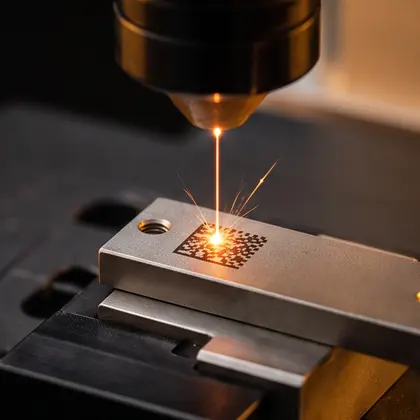
- Laser marking
- Writing the part number, lot and logo onto an implant with a laser, so it stays traceable after the label is gone.
- Unit 5 →
- Learning curve
- The number of cases a team needs before a new technique is as fast and reliable as their usual one.
- Unit 16 →
- Letter to file
- A documented internal decision that a change doesn’t need a new 510(k), with its reasoning and evidence.
- Unit 12 →
- Loaner set
- An implant and instrument set lent by the company for one operation, then returned, refilled and reprocessed.
- Unit 2 →
- Locking compression platealso LCP
- A plate with combination holes: one half threaded for a locking screw, the other a compression slot for a conventional screw.
- Unit 2 →
- Locking plate
- A plate whose screw heads thread into the plate, making a rigid fixed-angle frame that doesn’t rely on friction against the bone.
- Unit 2 →
- Locking screw
- A screw with a threaded head that locks into a threaded plate hole, so it can’t tilt or back out.
- Unit 2 →
- Lot
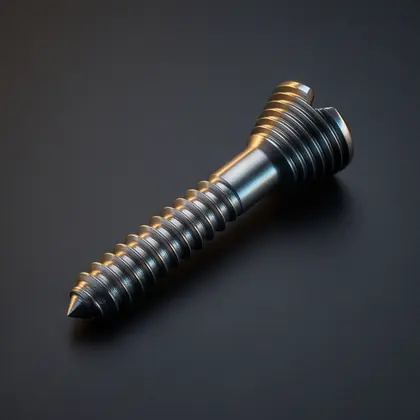
- A batch of parts made together: same metal, same machine, same days. If one part in a lot is bad, the others might be too.
- Unit 1 →

M
- Malunion
- A fracture that has healed in the wrong position, such as rotated, shortened or angled.
- Unit 2 →
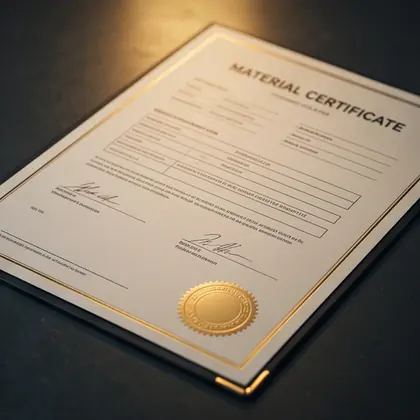
- Material certificate
- The supplier’s document for a batch of metal: its heat number, chemistry and tested properties against the standard.
- Unit 5 →
- MDR (EU)
- The European Union’s Medical Device Regulation (2017/745), which sets the rules for CE marking devices.
- Unit 12 →
- MDSAP
- Medical Device Single Audit Program: one audit accepted by the regulators of Australia, Brazil, Canada, Japan and the US.
- Unit 11 →
- Metallosis
- Dark staining and inflammation of tissue caused by metal debris or corrosion products.
- Unit 4 →
N
- Nonconforming product
- Any part that doesn’t meet its requirements. It is identified, segregated and dealt with by a recorded decision.
- Unit 6 →
- Nonunion
- A fracture that has failed to heal. The implant then carries the load for longer than it was designed to, and may break.
- Unit 2 →
- Notified body
- An independent organisation designated by an EU country to assess devices before they can carry the CE mark.
- Unit 12 →

O
- OEE
- Overall equipment effectiveness: availability × speed × quality, the share of planned time a machine spends making good parts.
- Unit 7 →
- ORIF
- Open reduction and internal fixation: the fracture is opened, lined up and fixed with implants such as plates and screws.
- Unit 2 →
- Osseointegration
- Bone growing directly onto an implant surface and bonding to it, as it does on titanium.
- Unit 4 →
P
- Passivation
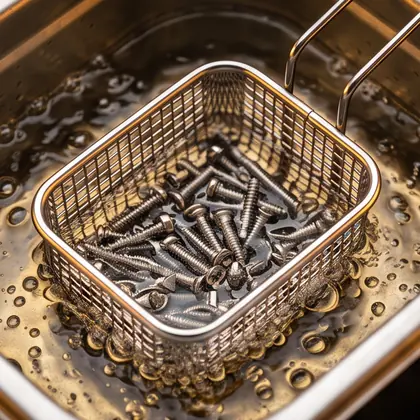
- A mild acid bath that cleans the metal and thickens its natural protective oxide layer.
- Unit 1 →
- Patient-specific implant
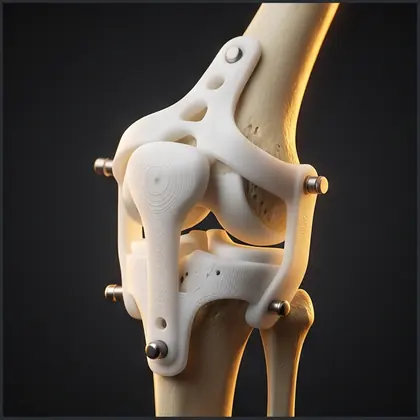
- An implant or guide made for one patient from their scans, often 3D printed.
- Unit 16 →
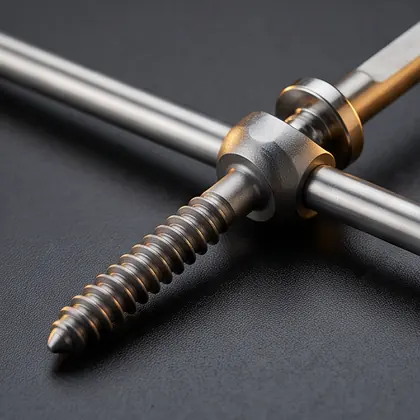
- Pedicle screw
- A screw passed into a vertebra through its pedicle, connected to rods to hold the spine still while it fuses.
- Unit 14 →
- PEEK
- Polyether ether ketone: a strong polymer used for spinal cages. It doesn’t show on X-ray.
- Unit 4 →
- Periosteum
- The thin membrane covering the outside of a bone. It carries much of the bone’s blood supply, so surgeons try not to strip it.
- Unit 2 →
- Post-market surveillancealso PMS
- Watching how a device performs once it’s sold: complaints, registries, literature and trends.
- Unit 11 →
- Powder reuse
- Re-using unmelted metal powder from earlier builds. Each cycle can pick up oxygen, so reuse limits are validated.
- Unit 17 →
- Predicate device
- A legally marketed device that a new device is compared with in a 510(k).
- Unit 12 →
- Process validation
- Proof, with planned tests and records, that a process consistently makes parts that meet requirements, often in IQ, OQ and PQ stages.
- Unit 5 →
- PSUR
- Periodic safety update report: the EU summary of post-market data and the benefit–risk conclusion for a device.
- Unit 11 →
Q
- QMSR
- The FDA’s Quality Management System Regulation (21 CFR 820), in force since February 2026, built on ISO 13485.
- Unit 11 →
R
- Ra
- Roughness average: the average height of the tiny peaks and valleys on a surface, in micrometres (µm).
- Unit 1 →
- Reaming
- Drilling out the canal of a long bone with flexible reamers so a nail of the right size fits.
- Unit 2 →
- Recall
- Asking hospitals to take a product off their shelves and return it because it may be faulty.
- Unit 3 →
- Reduction
- Putting the broken pieces back into line. Open reduction exposes the fracture; closed reduction does it without opening it.
- Unit 2 →
- Relative stability
- Fixation that allows a small, controlled amount of movement, as with a nail or bridge plate. The bone heals with callus.
- Unit 2 →
- Retained samples
- A few parts from every lot kept back, untouched, in case they are ever needed for an investigation.
- Unit 1 →
- Runout
- How far a spinning spindle or part wobbles off its true axis. Worn bearings increase it, and size and finish suffer.
- Unit 7 →
S
- Scrub nurse
- The nurse who is scrubbed and gowned, sets up the instruments and hands them to the surgeon.
- Unit 3 →
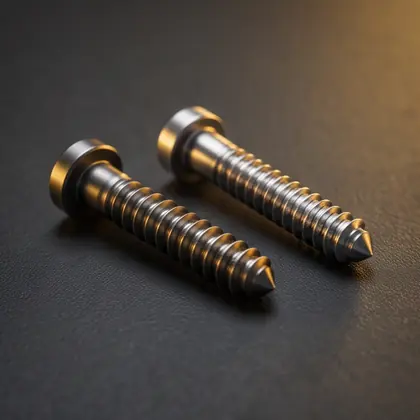
- Self-tapping screw
- A screw with cutting flutes at its tip, so it cuts its own thread in a pre-drilled hole without a separate tap.
- Unit 2 →
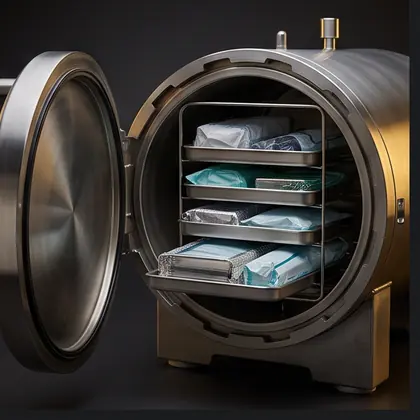
- Steam sterilisation
- Sterilising with pressurised steam in an autoclave. How hospitals reprocess instruments and loaner sets.
- Unit 9 →
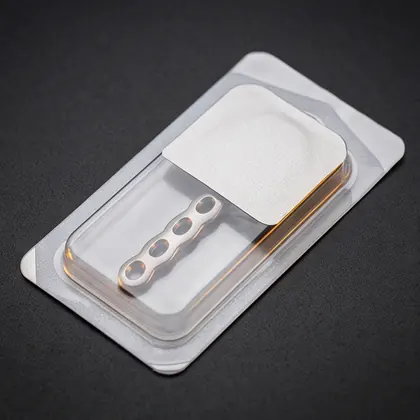
- Sterile barrier system
- The sealed pack that keeps a sterile implant sterile until it is opened in theatre.
- Unit 9 →
- Sterile field
- The area around the patient and the instrument tables that is kept sterile. Only scrubbed staff touch it; reps never do.
- Unit 3 →
- Sterility assurance levelalso SAL
- The probability that one unit is not sterile. Implants use 10⁻⁶: one in a million.
- Unit 9 →
- Stress shielding
- Bone thinning because a stiff implant carries the load the bone would normally carry.
- Unit 4 →
- Surgical technique guide
- The manufacturer’s step-by-step guide to putting a system in, instrument by instrument.
- Unit 3 →
- Surrogate outcome
- A measurement that stands in for an outcome, such as implant alignment on an X-ray instead of revision years later.
- Unit 16 →
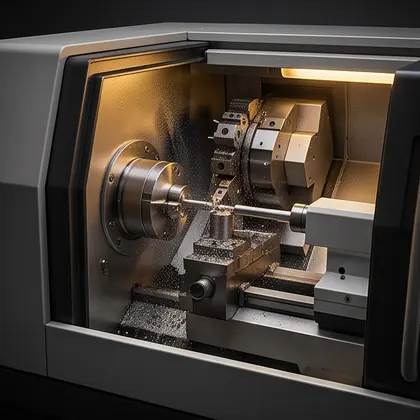
- Swiss-type lathe
- A CNC lathe whose bar slides through a guide bush close to the cutting tool, ideal for long, slender parts like bone screws.
- Unit 7 →


T
- Taper junction
- A cone-shaped junction that locks two parts together by friction, such as a head on a stem.
- Unit 14 →
- Tender
- A formal buying process where suppliers bid to supply a hospital or health system for a set period.
- Unit 15 →
- Thread root
- The bottom of the groove between two threads: the thinnest, most stressed part of a screw.
- Unit 1 →
- Ti-6Al-4V ELI
- The main titanium implant alloy: titanium with 6% aluminium and 4% vanadium, extra-low interstitial grade for toughness (ASTM F136).
- Unit 4 →
- Tibia
- The shin bone, the larger of the two bones of the lower leg and the one that carries most of the weight.
- Unit 2 →
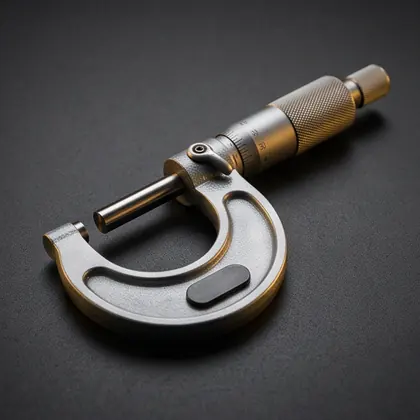
- Tolerance
- How far a dimension may vary from its nominal size and still be right, such as 3.50 mm ±0.05.
- Unit 5 →
- Total cost of ownershipalso TCO
- A machine’s price plus installation, validation, service, spares, downtime and scrap over its life.
- Unit 7 →
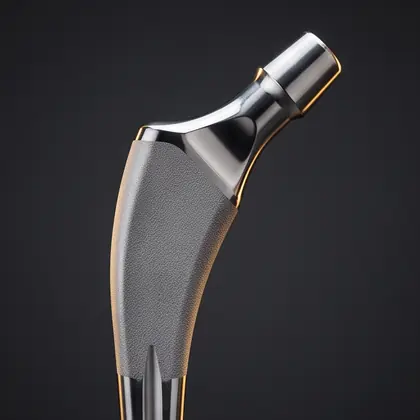
- Total hip replacementalso Total hip arthroplasty, THA
- Replacing both sides of the hip joint: a cup in the pelvis and a stem in the femur with a ball on top.
- Unit 14 →
- Total knee replacementalso Total knee arthroplasty, TKA
- Resurfacing the ends of the femur and tibia (and often the kneecap) with metal and plastic components.
- Unit 14 →


U
V
- Validation
- Proof that the finished device meets the user’s needs in real use. Process validation proves a process.
- Unit 10 →
- Value analysis committeealso VAC
- The hospital group that reviews evidence, cost and safety before a new product is bought.
- Unit 15 →
- Verification
- Proof that design outputs meet design inputs, usually by test, inspection or analysis.
- Unit 10 →
W
X
- XRF
- X-ray fluorescence: a handheld analyser that reads which elements a metal contains in seconds, without damaging it.
- Unit 4 →