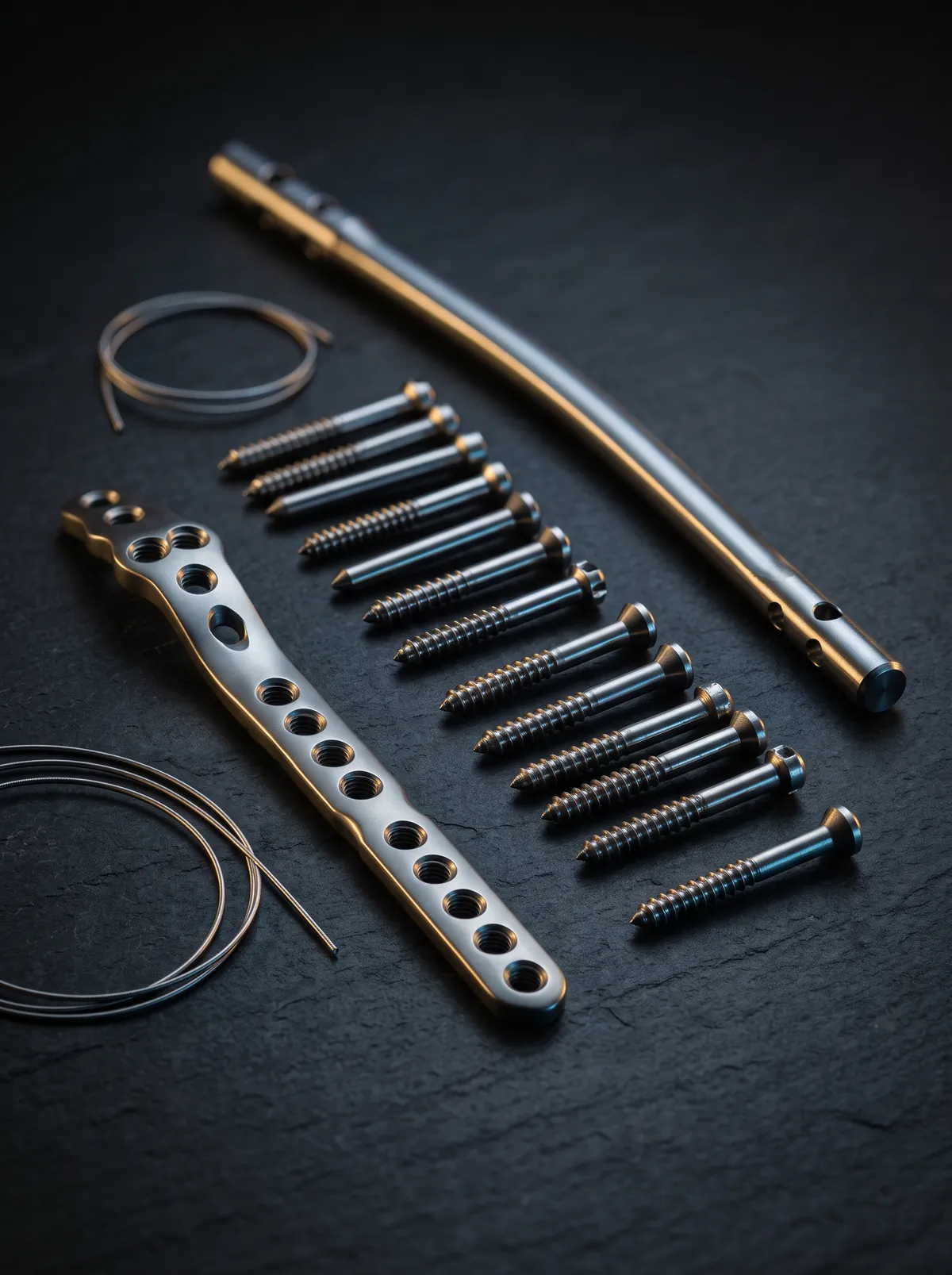
Both are safe, proven implant metals, and both are still used every day. Titanium alloy is about half as stiff as steel, closer to bone, nickel-free and gives cleaner scans, but it is harder to bend in theatre and more sensitive to scratches and notches. 316L stainless steel is cheaper, tougher to bend and shape, and gives more warning before it fails, but it is stiffer, contains nickel and blurs MRI and CT images more.
The two metals
Titanium alloy (Ti-6Al-4V ELI)
Titanium with 6% aluminium and 4% vanadium, in an “extra low interstitial” grade with tightly limited oxygen for toughness. Made to ASTM F136 (and ISO 5832-3). Commercially pure titanium (ASTM F67) is used for some small plates. Titanium parts are often anodised in colours that code their size.
Stainless steel (316L)
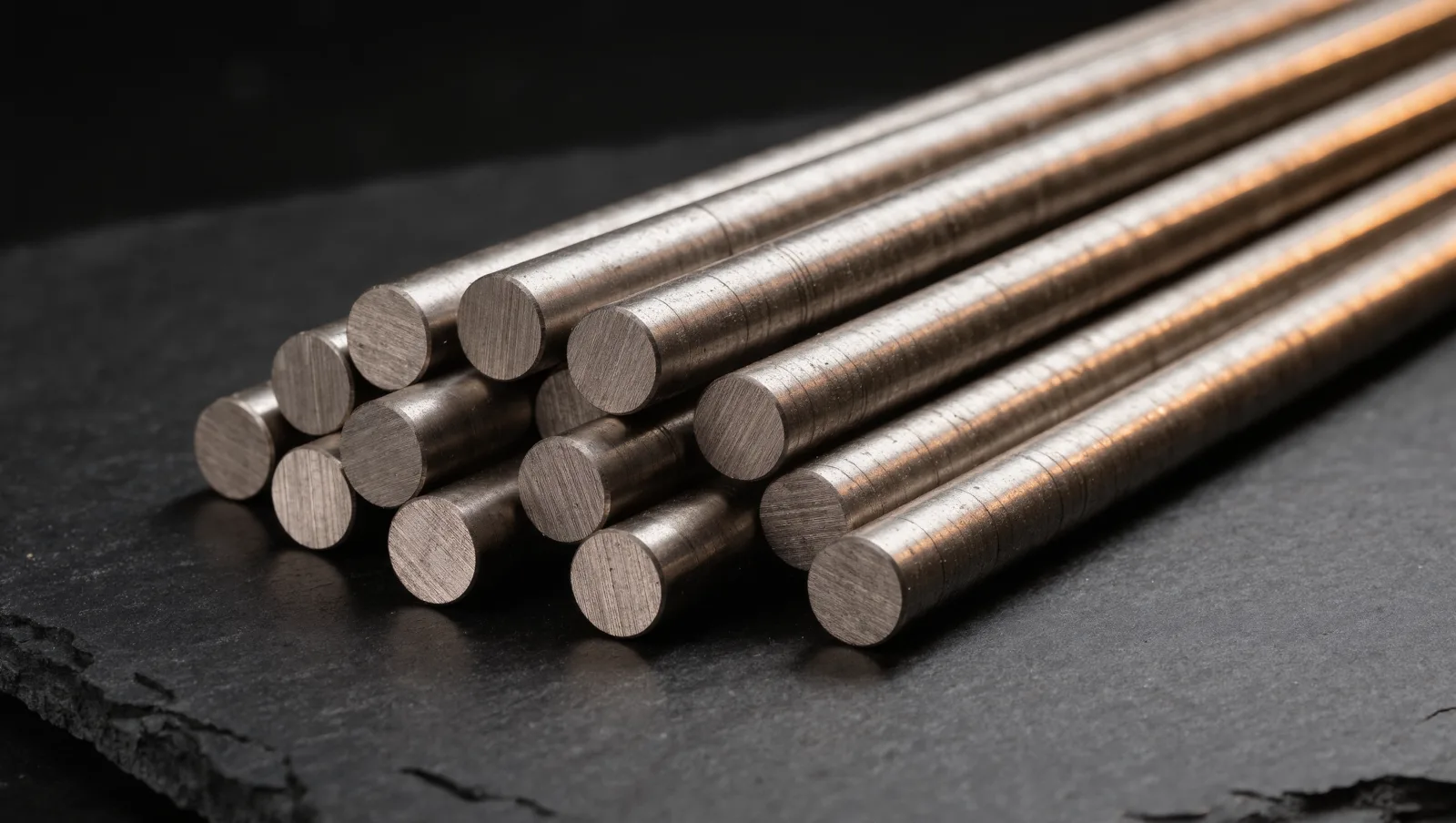
An iron alloy with chromium, nickel and molybdenum, with low carbon (the “L”) for corrosion resistance. Implant grades are made to ASTM F138 bar (and ISO 5832-1), cleaner than the 316L used for kitchen sinks. Usually supplied cold-worked for strength.
Side by side
| Titanium alloy | 316L stainless steel | |
|---|---|---|
| Stiffness (elastic modulus) | About 110 GPa | About 190–200 GPa |
| Cortical bone, for comparison | Roughly 15–20 GPa | |
| Bending in theatre | Springs back; harder to contour, less forgiving of repeated bends | Bends and holds its shape; easier to contour |
| Before it fails | Strong but notch-sensitive; scratches and sharp corners shorten fatigue life | More ductile; tends to bend visibly before it breaks |
| Nickel | None | About 13–15% (ASTM F138) |
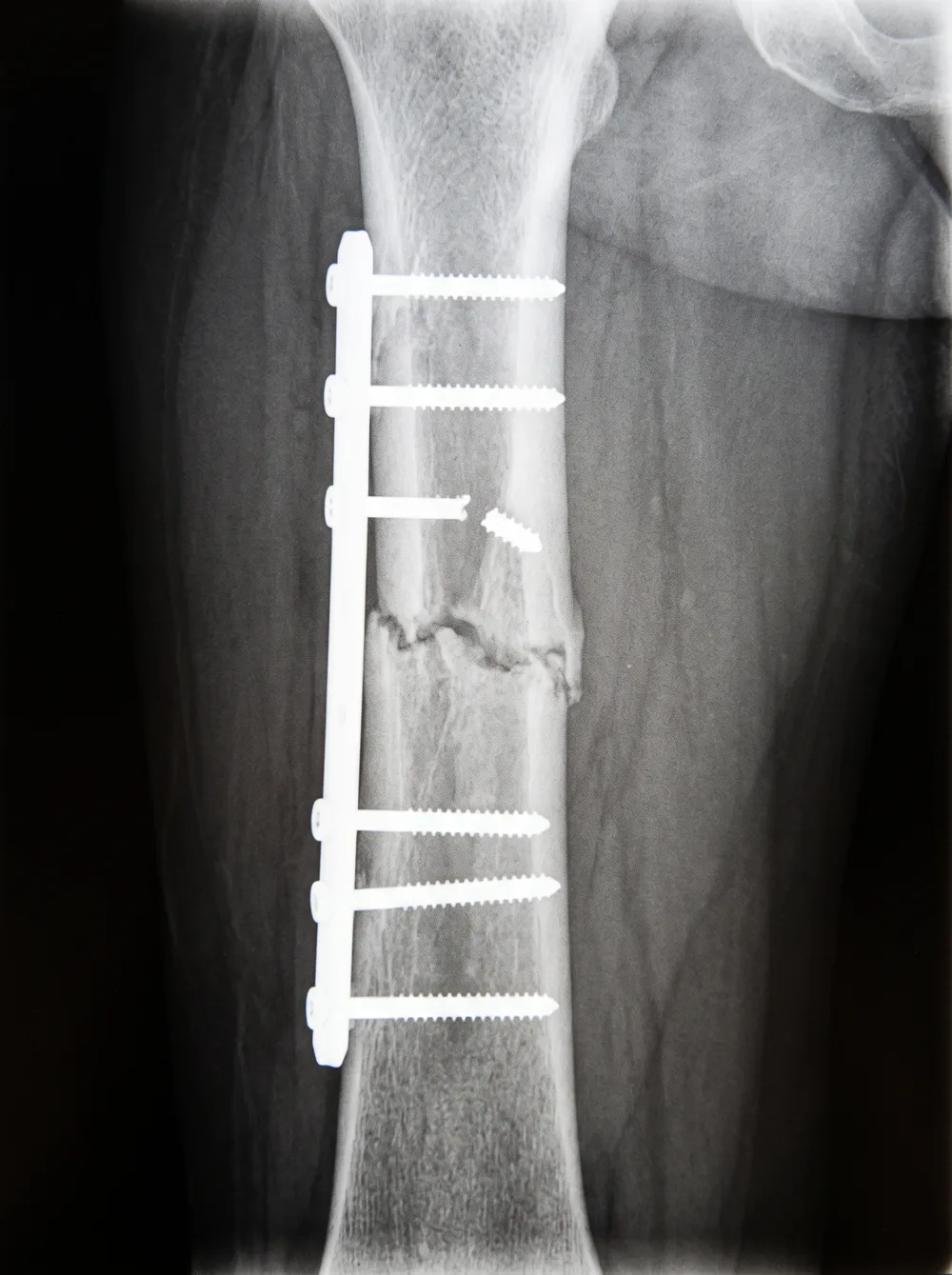
| MRI and CT | Less image distortion | More distortion around the implant |
| Bone bonding | Bone grows onto it readily | Bone sits against it, with little bonding |
| Cost | Higher | Lower |
Whether an implant is safe in an MRI scanner depends on the device and is stated in its labelling (“MR Conditional” with the conditions), not on the metal alone.
Why stiffness matters
Bone stays strong only when it carries load. A very stiff implant carries most of the load itself and the bone beneath it can thin over time, which is called stress shielding. Titanium’s lower stiffness spreads more load to the bone, one reason it is popular for nails, plates in younger patients and anything meant to stay in for life. In fracture fixation the effect is modest, and design and screw placement matter more than the metal.
Why steel is still used
- Cost. Steel implants are cheaper to make, which matters in tenders and in health systems with tight budgets.
- Shaping. Surgeons who contour plates by hand often prefer how steel bends and stays bent.
- Removal. Bone bonds less to steel, so steel screws are usually easier to take out later, as with plates removed from children or athletes.
- Track record. Many classic plate and screw systems were designed in steel and have decades of results.
Don’t mix them
Two different metals touching in body fluid can corrode each other, like a small battery (galvanic corrosion). Plates and screws in one construct are normally from the same metal and the same system, and the instructions for use say which components can be combined. Mixing systems or metals is a common audit finding and a real risk. Unit 4 covers corrosion, wear and why a titanium plate came out stained black →
And the other implant materials
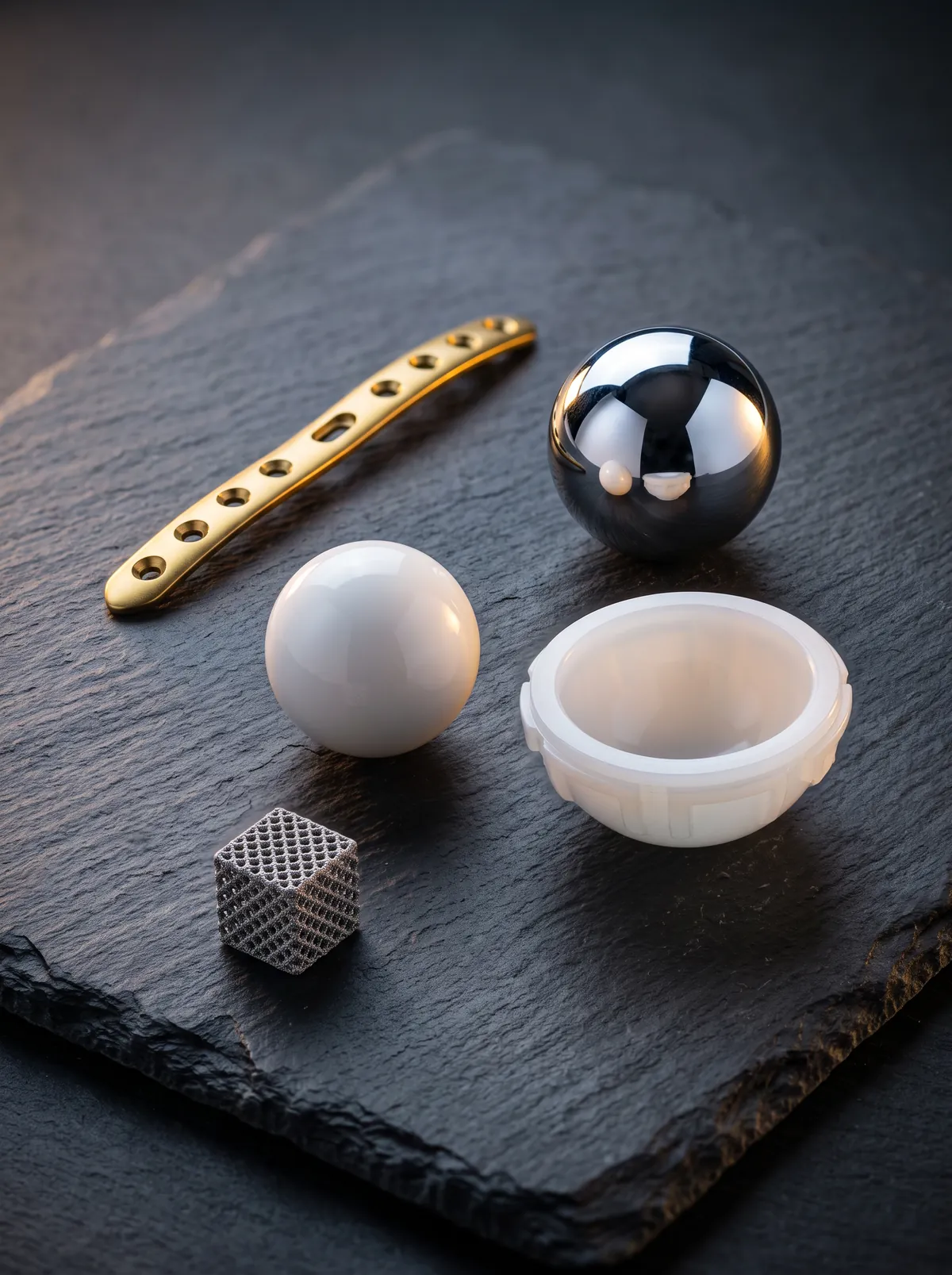
Joint replacements add cobalt-chrome (very hard and wear-resistant, for heads and knee components), ceramics (for hip heads and liners), polyethylene (the bearing liner) and PEEK (a polymer for spinal cages that is invisible on X-ray). The free implant cheat sheet has all of them on one page.